Hubble Telescope Reveals a Decagonal Atmospheric Formation at Saturn’s South Pole
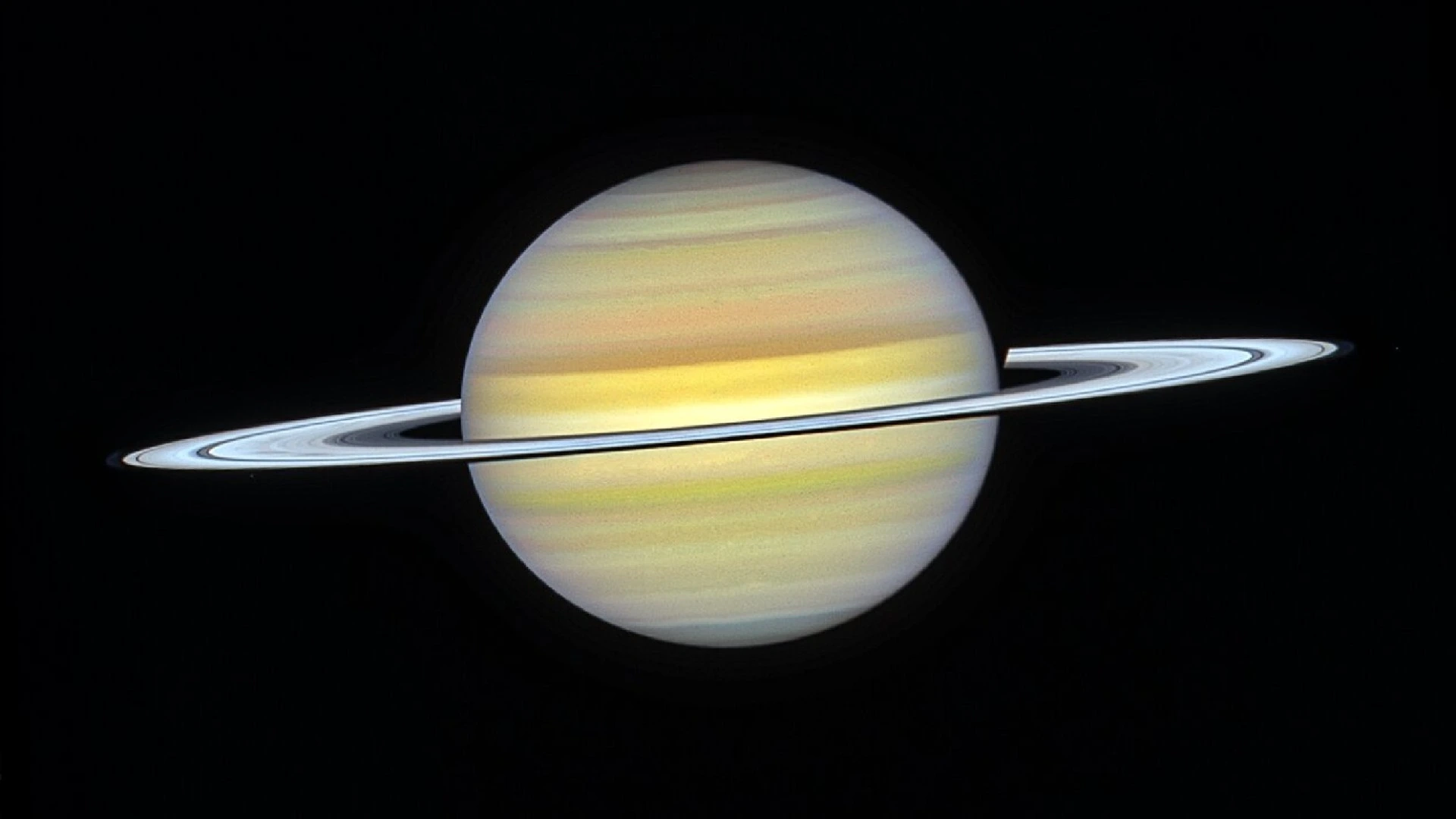
The Hubble Space Telescope has detected a massive, evolving ten-sided atmospheric wave surrounding Saturn’s south pole. According to a study published in the journal Science Advances, this marks the first scientific documentation of a regular polygonal jet-stream pattern in the Southern Hemisphere of the giant planet.
The newly discovered formation resembles Saturn’s famous hexagon, which has remained stable around the planet’s north pole for decades. However, it differs in several key respects. Researcher Amy Simon explained that the new southern pattern appears to be gradually developing, offering scientists a rare opportunity to observe a unique atmospheric phenomenon as it forms, unlike the stable northern hexagon.
The discovery resulted from a collaborative effort involving ground-based observatories and amateur astronomers through the University of the Basque Country’s Virtual Planetary Observatory and Laboratory. Researcher Agustín Sánchez-Lavega and his colleagues first identified preliminary features in 2024. Images captured in 2025 provided further evidence, while Hubble data dating back to 2023 confirmed the finding. The data revealed that the decagonal wave lies within a powerful jet stream and extends deep through several layers of Saturn’s atmosphere.
The scientific team plans to continue systematic observations using the Hubble and James Webb space telescopes, alongside computer modelling, to determine whether the phenomenon will stabilise into a long-lasting structure similar to the northern hexagon or continue to evolve. The discovery highlights the major scientific importance of long-term monitoring programmes in tracking the atmospheric dynamics of giant planets.