NASA Successfully Tests Low-Noise Supersonic Aircraft
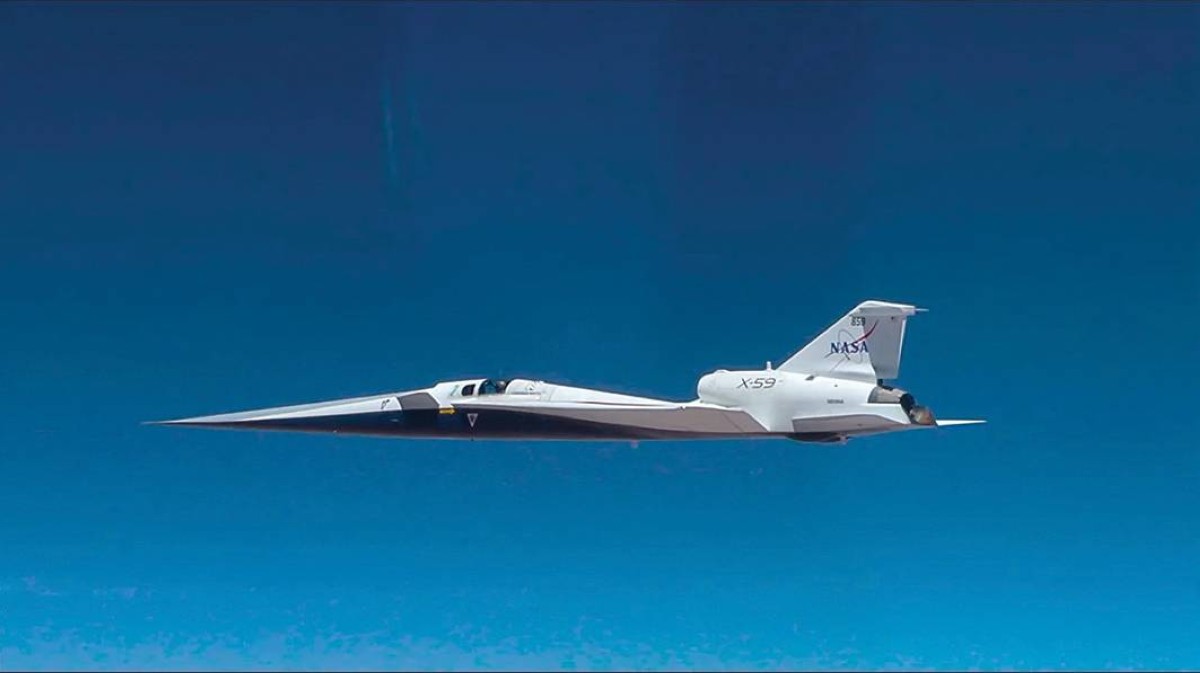
The U.S. National Aeronautics and Space Administration (NASA) has achieved a new technological milestone after its experimental quiet aircraft, the X-59, successfully broke the sound barrier for the first time. The achievement is part of NASA’s program to develop a new generation of low-noise supersonic aircraft.
Test pilot Jim Clio Lis conducted the historic flight on June 5. The aircraft took off from Edwards Air Force Base in California and returned after an 81-minute mission, during which it reached a top speed of approximately Mach 1.1, equivalent to nearly 1,300 kilometers per hour (808 mph).
NASA Administrator Jared Isaacman said the aircraft is now preparing for its first official near-silent demonstration flights. He noted that the team has successfully completed 16 test flights over the past three months since its maiden flight on October 28, with plans to eventually reach speeds of Mach 1.4.
The X-59 was specifically designed to fly at supersonic speeds while significantly reducing noise levels. Instead of producing the traditional sonic boom associated with breaking the sound barrier, the aircraft generates only a soft sonic “thump.” During the test flight, it was accompanied by a McDonnell Douglas F-15 Eagle, whose louder noise helped mask the limited sound produced by the experimental aircraft.
The aircraft is expected to undergo more advanced testing at Mach 1.4 and an altitude of approximately 16,800 meters (55,000 feet). These trials will pave the way for experimental flights over U.S. cities to collect data on public reactions to the reduced noise. The findings are expected to help regulators establish new standards that could enable the return of commercial supersonic air travel through NASA’s QueSST program.