CNCLT renforce son leadership dans la protection des victimes de la traite humaine grâce à un partenariat stratégique
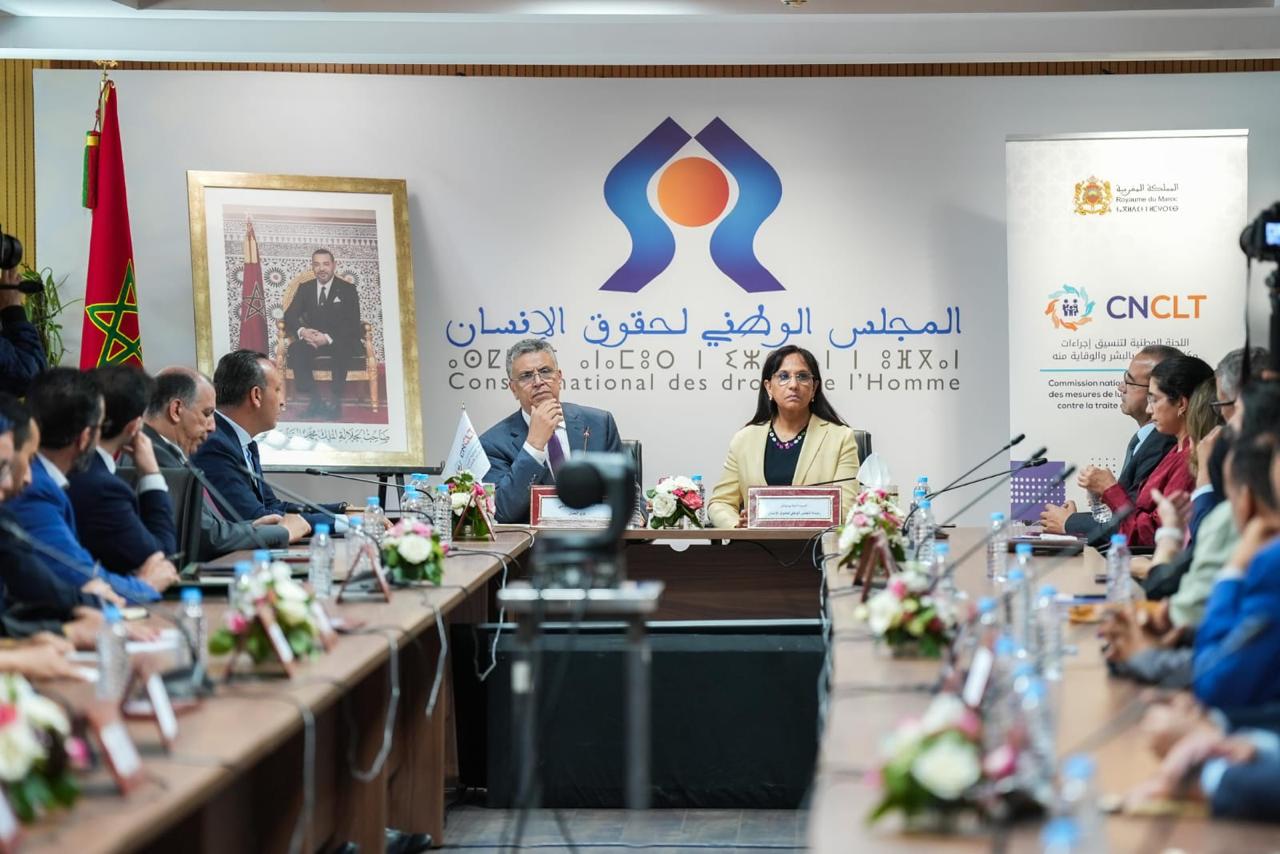
As part of continuing the implementation of its legal mandates and strengthening its national coordination role, the National Commission for the Coordination of Measures to Combat and Prevent Trafficking in Persons announced the signing of a Memorandum of Understanding with the National Human Rights Council. The agreement aims to establish an integrated territorial coordination system for the referral and care of victims of human trafficking. The signing took place during an official ceremony chaired by the Minister of Justice, in his capacity as Supervisory Chair of the National Commission, and the President of the Council, in the presence of several officials, representatives of national institutions, international partners, and civil society organizations.
This agreement crowns a continuous process of efforts undertaken by the National Commission, as the central mechanism responsible for coordinating public policies in the field of combating human trafficking, within the framework of implementing the provisions of Law No. 27.14 and the objectives of the National Plan to Combat and Prevent Human Trafficking 2023–2030 and its Strategic Plan 2023–2026. It also contributes to the implementation of the National Referral Mechanism for Victims of Trafficking in Persons, adopted on March 23, 2023, which the Commission has developed as a unified reference framework for the early identification of victims, their referral, and ensuring effective care and protection.
Over recent years, the National Commission has accumulated significant achievements in strengthening the protection system, notably through establishing institutional coordination mechanisms, launching training and capacity-building programs for frontline actors, and developing practical tools for victim assistance. It has also contributed to upgrading temporary and emergency shelter centers in Fez and Tangier, thereby reinforcing the national protection framework and responding to the needs of the most vulnerable groups.
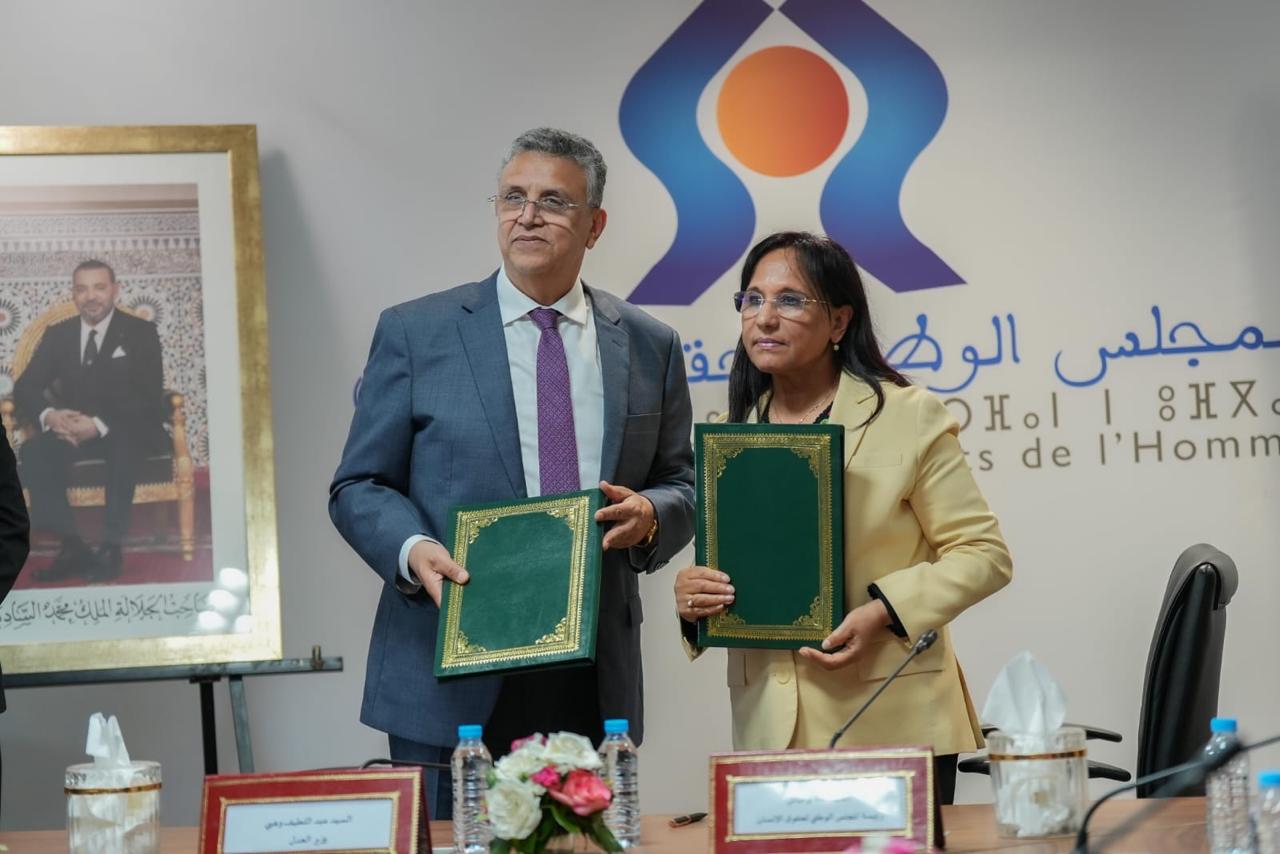
In this context, the Memorandum of Understanding signed with the National Human Rights Council represents a new strategic step toward strengthening the territorial implementation of these efforts. It provides for the creation of expanded regional coordination committees bringing together various institutional stakeholders, including judicial and security authorities, government departments, national institutions, and civil society organizations. This framework will help unify interventions, enhance early detection of potential cases, accelerate referral and assistance processes, and ensure support for victims until their reintegration or voluntary return.
The memorandum is also particularly important as it institutionally frames assistance for victims identified outside the judicial pathway, especially those detected by social actors, community institutions, and civil society organizations. It ensures their rapid orientation toward established protection and assistance mechanisms through a proactive and integrated approach that respects their fundamental rights and preserves their dignity.
This partnership further reaffirms the National Commission’s commitment to strengthening a comprehensive human-rights-based approach that places the protection of victims and the preservation of their dignity at the center of all interventions. This will be achieved by improving the quality of services provided, facilitating access to them, and enhancing coordination among stakeholders at both regional and local levels.
In line with the principles of good governance guiding the Commission’s programs, the memorandum provides for the establishment of a joint monitoring committee and the adoption of regular evaluation mechanisms through semi-annual meetings, precise performance indicators, and periodic reports to monitor progress toward achieving the set objectives, with the possibility of revising its provisions in response to legal and institutional developments.
On this occasion, it has been emphasised that this memorandum represents an advanced stage in the work of the National Commission, marking the transition toward the effective territorial implementation of referral and assistance mechanisms, thereby strengthening the effectiveness of interventions and ensuring better protection for victims of human trafficking with full respect for their rights and dignity.
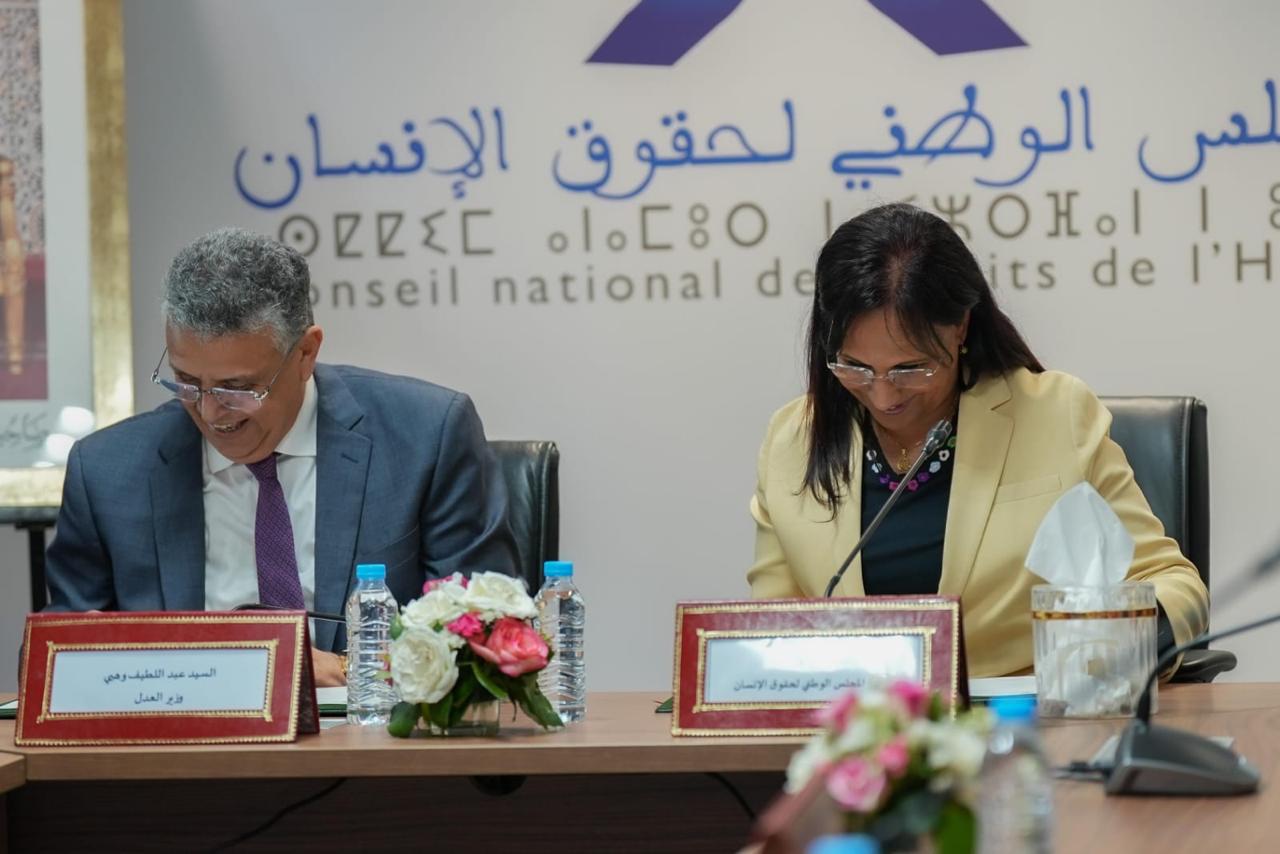
This event reflects the National Commission’s commitment to continuing the development of the national system to combat human trafficking through strengthening institutional coordination, expanding partnerships, and enhancing protection and assistance mechanisms, thereby reinforcing the position of the Kingdom of Morocco as a regional model in combating this crime and safeguarding the rights of victims.