Study Warns: Ice Loss Continues as Global Temperatures Rise
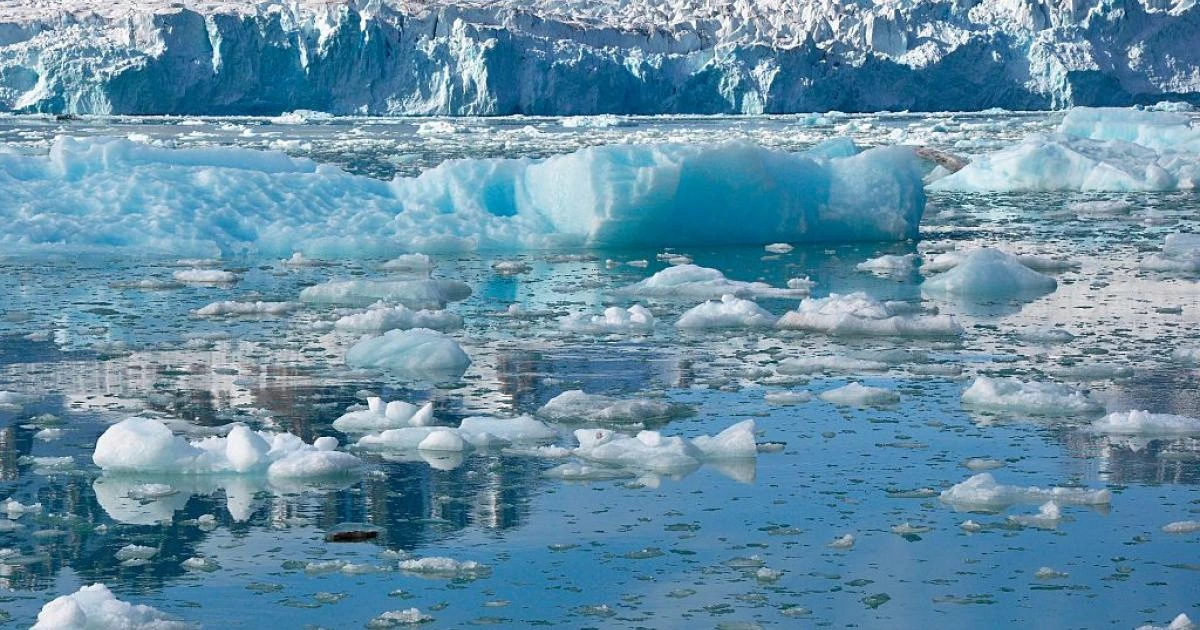
A new scientific study published in the journal PNAS and conducted by researchers from the University of Southampton and the National Oceanography Centre in the United Kingdom has found that the temporary slowdown in the decline of Arctic winter sea ice has come to an end, following record-low ice levels recorded during the winters of 2025 and 2026 due to accelerated melting.
The study explains that incorporating the latest satellite observations into the climate record has restored the trend of the past two decades to a statistically significant decline, confirming the continued loss of sea ice driven by global warming and disproving earlier interpretations that suggested the region might be entering a period of temporary stability.
Lead researcher Du Chan said that the sharp decline recorded in recent years has changed scientists’ understanding of winter sea ice evolution. What appeared to be a slowdown in the early 2020s was, in fact, only a temporary fluctuation within a long-term downward trend.
According to the study, Arctic winter sea ice extent at its seasonal peak between February and March declined by 5.8% between 2024 and 2025, marking the largest annual decrease since satellite monitoring began in 1978. Although 2026 saw a modest recovery, sea ice extent remained at the second-lowest level ever recorded.
The researchers emphasize that winter sea ice plays a vital role in the global climate. Beyond serving as an indicator of temperature change, it acts as an insulating barrier between the relatively warmer Arctic Ocean and the frigid winter atmosphere. Its decline allows more heat and moisture to escape into the atmosphere, altering pressure systems and storm patterns around the world.
Comparisons between field observations and advanced climate models showed that the sharp decline observed in 2025 was unusual but physically plausible, according to co-author Alessandro Silvano. He noted that climate models project future sea ice extent to continue fluctuating around historically low levels.
The researchers also warned that any short-term increase in sea ice caused by temporary weather variability should not be interpreted as a reversal of the long-term climate trend. Decades of observations, they conclude, clearly demonstrate the ongoing loss of polar sea ice.