Morocco’s Green Hydrogen Potential: Challenges and Opportunities
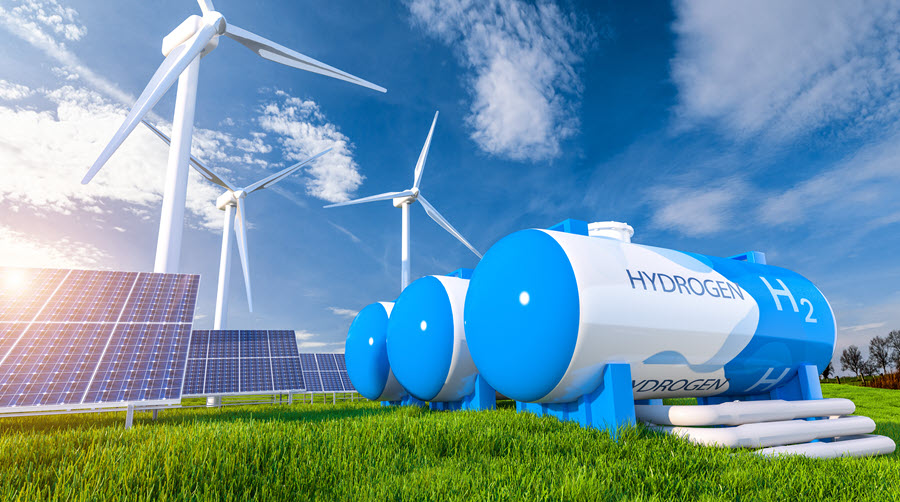
Alalam24, The Moroccan Institute for Strategic Intelligence reports that Morocco possesses “genuine” and “competitive” qualifications that position it as a leader in the field of green hydrogen, both in North Africa and across the African continent
In its strategic analysis titled “Green Hydrogen in Morocco: Challenges and Opportunities for the Kingdom,” the institute highlights Morocco’s ambition to be part of the global energy transition since launching an ambitious renewable energy program in 2009. The country aspires to contribute to the development of green hydrogen technology on its soil
The analysis underscores Morocco’s valuable assets, including an average of 3,000 hours of annual sunlight exposure, one of the highest rates globally, and abundant wind energy resources. Additionally, its geographical proximity to Europe plays a significant role. For countries along the southern Mediterranean coast, especially Morocco, which is exploring its hydrocarbon reserves, this green transition appears inevitable
Among renewable resources, green hydrogen stands as an alternative solution for Morocco. The nation has set a goal to achieve 52% of renewable energy production by 2030, aiming to reduce greenhouse gas emissions by up to 20% and contribute to carbon removal in partner countries. Morocco’s ability to harness solar and wind resources for green ammonia production, which is carbon-free, represents a genuine strategic opportunity due to its natural synergy with phosphate, of which Morocco is the world’s second-largest producer
The study suggests that, provided financing and utilization conditions are met, this can also create a positive loop of multiple external benefits. These include significantly reducing energy dependence, improving purchasing power, enhancing industry competitiveness, and strengthening Morocco’s position as a regional leader
Several green hydrogen projects are currently under development in Morocco, notably the “Office Chérifien des Phosphates” program, presented to His Majesty King Mohammed VI, which primarily aims to increase fertilizer production while continuing efforts to achieve carbon neutrality by 2040
In this context, analysts assert that Morocco’s ambition is becoming clearer and more tangible through the significant potential of the green hydrogen sector, which could reduce energy dependence from around 88% to 35% by 2040 and less than 17% by 2050.
In this regard, Morocco is expected to invest an equivalent of 7% of its GDP in hydrogen, while investment plans for hydrogen in some European countries remain modest. Given the pressing climate issues, the development of green energy sources presents a considerable challenge, especially for Morocco, which has set the goal of producing over half of its energy mix from renewables by 2030
In this context, green hydrogen can play a pivotal role in achieving this goal, representing an essential part of the strategy to decarbonize industry and develop solar, wind, and hydropower energies