Study Reveals an Innovative Method to Enhance the Effectiveness of Lung Cancer Treatment
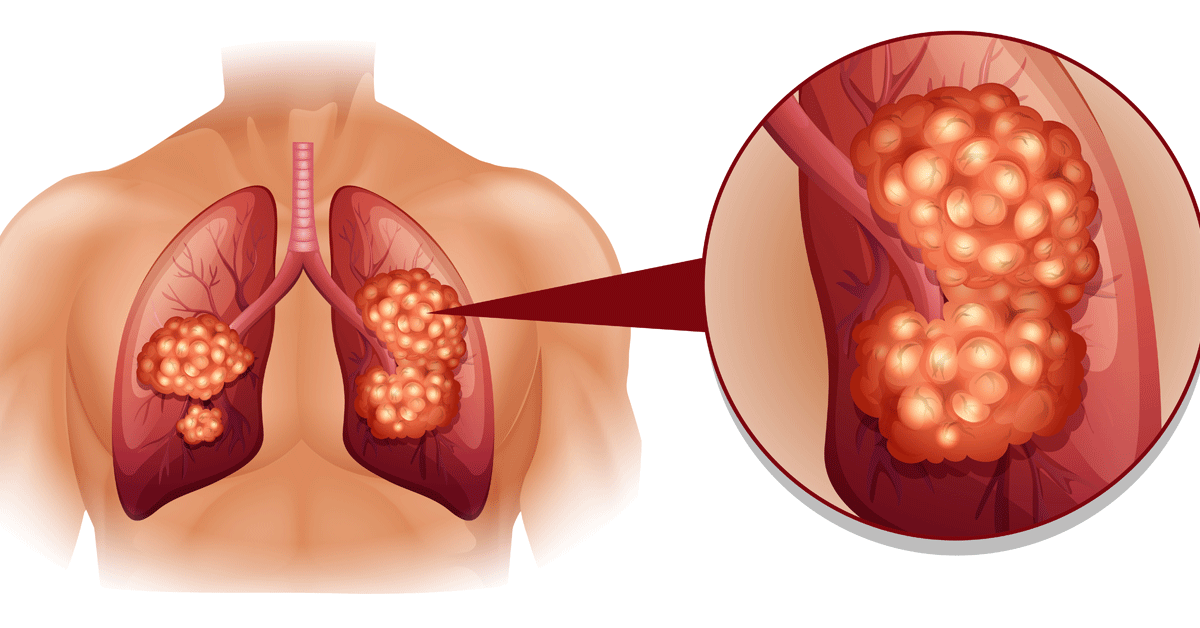
A recent medical study published in the International Journal of Molecular Sciences (IJMS) has revealed an innovative approach that increases the response of lung tumors to chemotherapy by blocking growth hormone receptors that protect cancer cells.
According to the website Lenta.ru, the research focused on non-small cell lung cancer (NSCLC). The findings showed that the levels of growth hormone receptors (GHR) in affected tissues were significantly higher than in healthy tissues.
The results indicated that patients with high levels of these receptors had an average survival of 36 to 40 months, while the average survival reached 66 months among those with lower levels. This is because the hormone activates proteins that expel chemotherapy drugs from the cell and prevent programmed cell death.
In this regard, Professor John Kopchick, who led the research team, stated that these findings open promising prospects for significantly improving the effectiveness of current treatments. He explained that the use of the drug Pegvisomant, approved for the treatment of acromegaly, successfully reversed the resistance of cells to the drugs doxorubicin and cisplatin, allowing a reduction in the administered doses.