Scientists Develop an Innovative Method to Detect and Track Space Debris
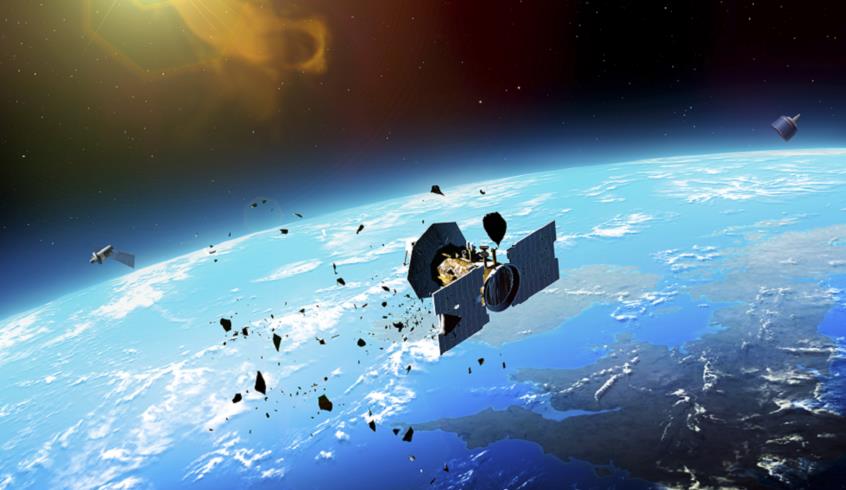
Scientists from Johns Hopkins University in the United States, in collaboration with Imperial College, have developed an innovative method to detect and track uncontrolled space debris as it enters Earth’s atmosphere. The approach involves repurposing networks of seismic sensors—originally designed to monitor vibrations within the Earth—as tools for tracking objects from space.
According to the research team, debris fragments emit sound waves similar to shock waves when they enter the atmosphere at speeds exceeding the speed of sound. By analyzing these signals, researchers can accurately determine the debris’ trajectory, speed, altitude, and the moment it breaks apart.
The method proved successful when tested on China’s Shenzhou-15 orbital module over Southern California. Data showed that the object was traveling at speeds ranging between 25 and 30 Mach—approximately 7.8 kilometers per second—before completely burning up in the atmosphere.
Scientists noted that this technology will enhance future monitoring of space debris, helping to reduce risks to aviation and infrastructure, identify impact zones of fragments that do not fully burn up, and improve understanding of how objects disintegrate and how fine particles spread.
This development comes at a time when space debris is a growing global concern. The European Space Agency estimates that around 1.2 million dangerous debris fragments are currently orbiting Earth, a number expected to rise as more satellites reach the end of their operational lifespans.